

Case Study: Lowering Landed Costs via Multi-Commodity FCL Container Consolidation
November 5, 2026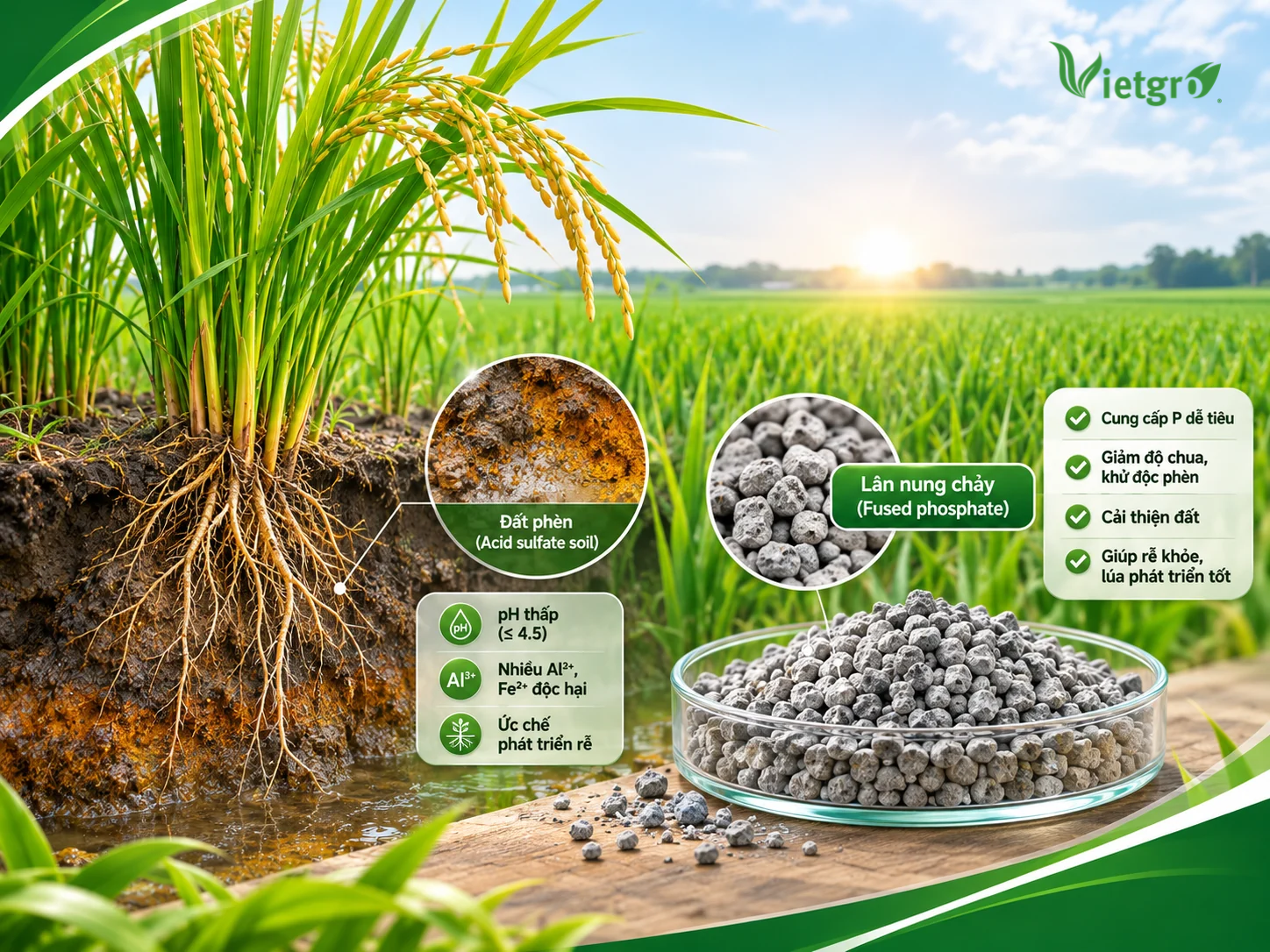
Ca–Mg Fused Phosphate: Notable Rice Research Results on Acid Sulfate Soil
November 10, 2026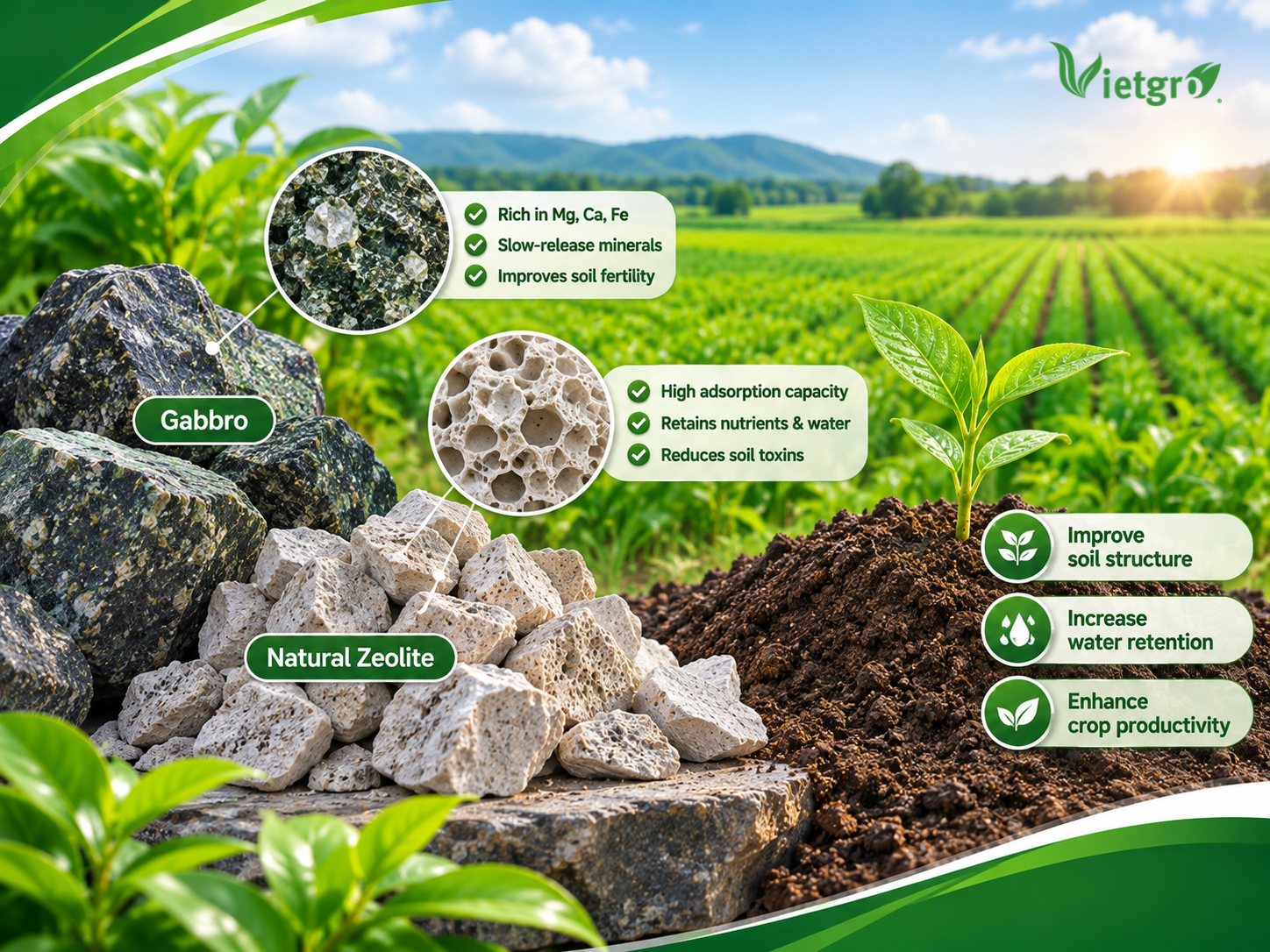
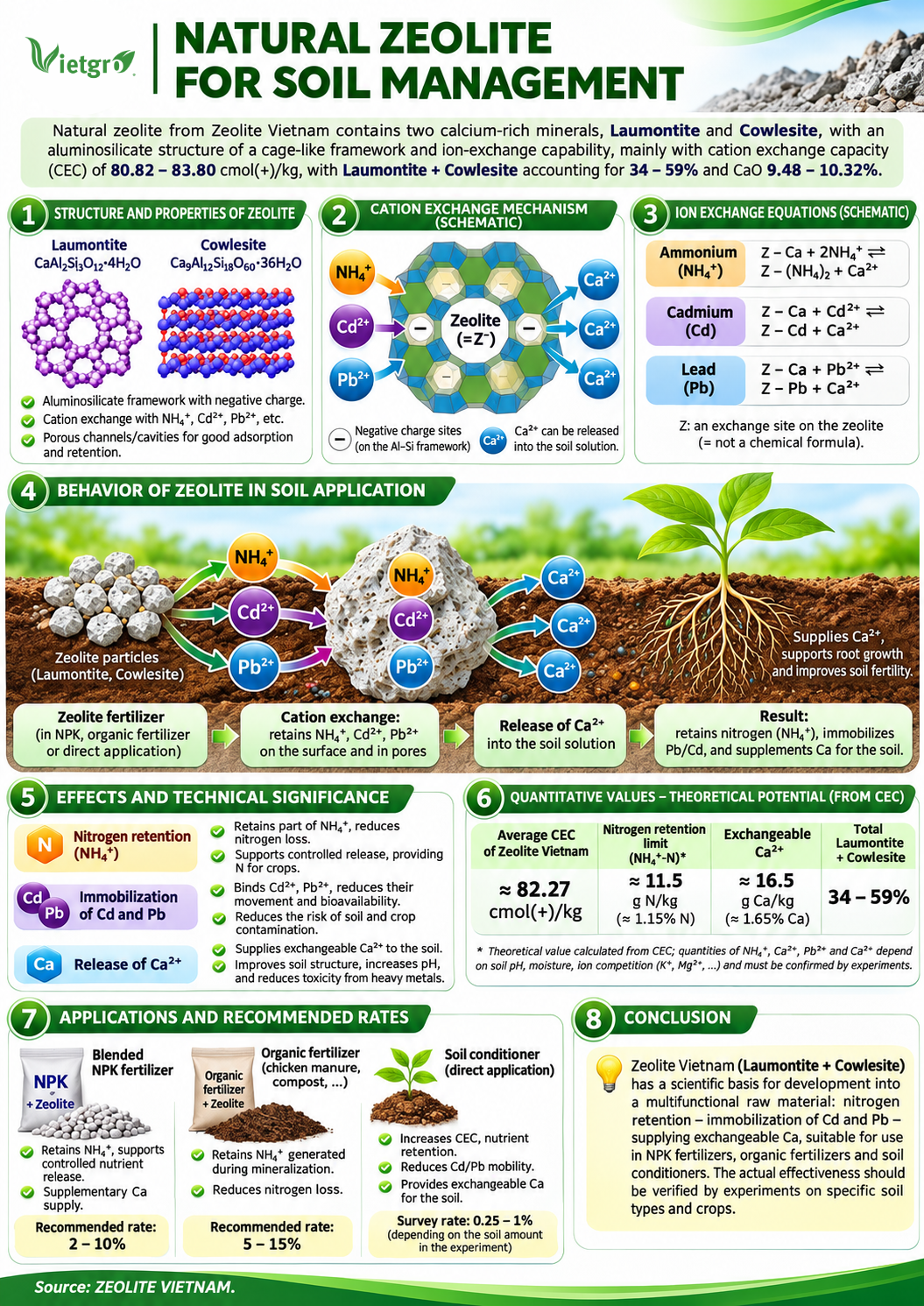
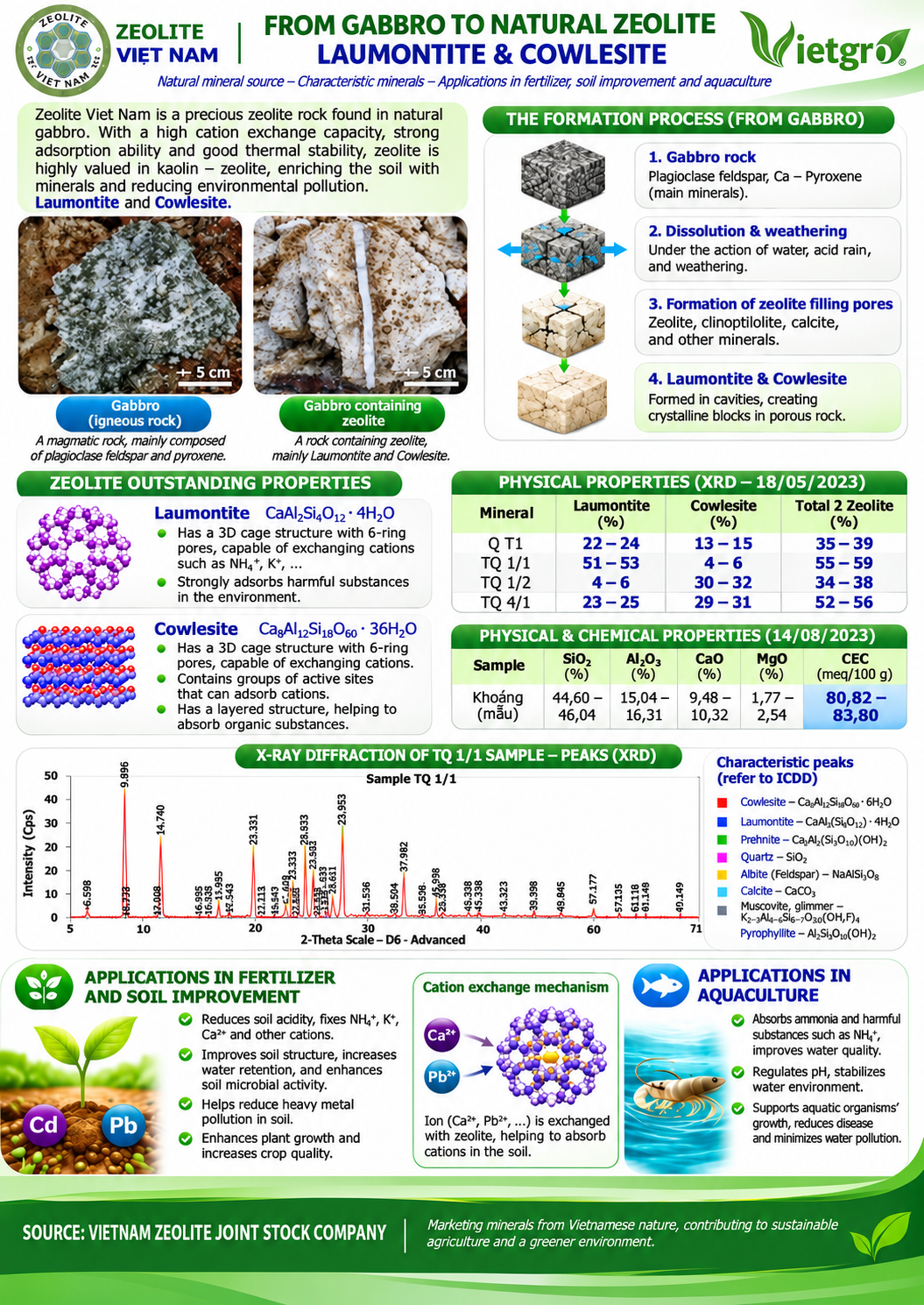
Natural zeolite is a mineral material of interest for fertilizer production, soil improvement and aquaculture. At the Zeolite Vietnam deposit, researchers are studying a geological connection between weathered gabbro and two calcium-rich zeolite minerals: LAUMONTITE and COWLESITE.
The findings below describe the geological model and tested samples, as well as potential applications that require further practical verification.
1. WHAT IS NATURAL ZEOLITE?
Zeolites are natural aluminosilicate minerals with structures containing channels, cavities and ion-exchange sites. These features give them potential to interact with certain nutrients and other ions.
While many zeolite deposits worldwide are associated with volcanic rocks, the Zeolite Vietnam mineral source is being studied for its relationship with strongly weathered and altered gabbro.
2. HOW CAN ZEOLITE FORM FROM GABBRO?
Gabbro is an intrusive mafic rock composed mainly of calcium-rich plagioclase and pyroxene. During geological movement, fractures can allow water and hydrothermal fluids to enter the rock and alter its original minerals.
Through weathering and hydrothermal alteration, calcium (Ca), aluminium (Al) and silicon (Si) can dissolve and be redistributed. Under suitable conditions, secondary minerals such as prehnite, zeolite, calcite and clay minerals may form.
The proposed pathway is: Gabbro → fracturing and water infiltration → alteration of Ca–Al–Si minerals → formation of laumontite and cowlesite.
This is a scientifically grounded geological model. However, the specific formation sequence at the mine still requires confirmation through petrographic research.
3. LAUMONTITE AND COWLESITE: TWO CALCIUM-RICH ZEOLITES
Laumontite
Laumontite has an aluminosilicate framework with channels and ion-exchange sites. Calcium ions in its structure can exchange with cations such as ammonium (NH₄⁺), potassium (K⁺) and certain metal ions. It commonly forms in hydrothermal alteration and low-grade metamorphic environments involving Ca–Al–Si-rich rocks.
Cowlesite
Cowlesite is a less common calcium zeolite with a distinctive two-dimensional layered structure. Water and cations are present between its layers. Its structure provides a basis for cation exchange, although the actual adsorption capacity for individual ions still needs to be determined experimentally.
4. WHAT DID THE SAMPLE ANALYSIS SHOW?
X-ray diffraction (XRD) analysis dated 18 May 2023 examined four samples. The combined laumontite and cowlesite content ranged from approximately 34% to 59%, depending on the sample.
- Sample TQ 1/1: 51–53% laumontite and 4–6% cowlesite.
- Sample TQ 4/1: 23–25% laumontite and 29–31% cowlesite.
Chemical and cation exchange capacity (CEC) analyses dated 14 August 2023 reported:
- SiO₂: 44.60–46.04%
- Al₂O₃: 15.04–16.31%
- CaO: 9.48–10.32%
- MgO: 1.77–2.54%
- CEC: 80.82–83.80 meq/100 g
These values describe the samples analysed. They should not automatically be treated as representative of the entire mineral deposit or all commercial products.
5. POTENTIAL APPLICATIONS IN AGRICULTURE AND AQUACULTURE
Fertilizers and soil improvement
Zeolite’s cation-exchange properties may help retain some NH₄⁺, K⁺ and other nutrient ions, which can subsequently exchange with the soil solution. This makes it a material of interest for research into fertilizer blends, nutrient retention and soil nutrient management.
Aquaculture
Zeolite has potential to adsorb NH₄⁺ through cation exchange and may support research into ammonium management in water. Actual performance depends on pH, salinity, competing ions and conditions of use. Further research is particularly important for brackish and saltwater environments.
6. A MATERIAL FOR FURTHER RESEARCH
The occurrence of both laumontite and cowlesite, their calcium-rich character and the CEC measured in the tested samples make the Zeolite Việt Nam mineral source an area of interest for further study.
Its practical effectiveness in fertilizers, soil improvement and aquaculture must be verified under relevant conditions of use.
Source: ZEOLITE VIỆT NAM. Reference materials include XRD analysis dated 18 May 2023, chemical and CEC analysis dated 14 August 2023, weathered gabbro samples, and mineralogical research on laumontite and cowlesite.