
Case Study: Streamlining High-Risk Chemical Procurement and Maritime Transit for Regional Industrial Utilities
October 27, 2026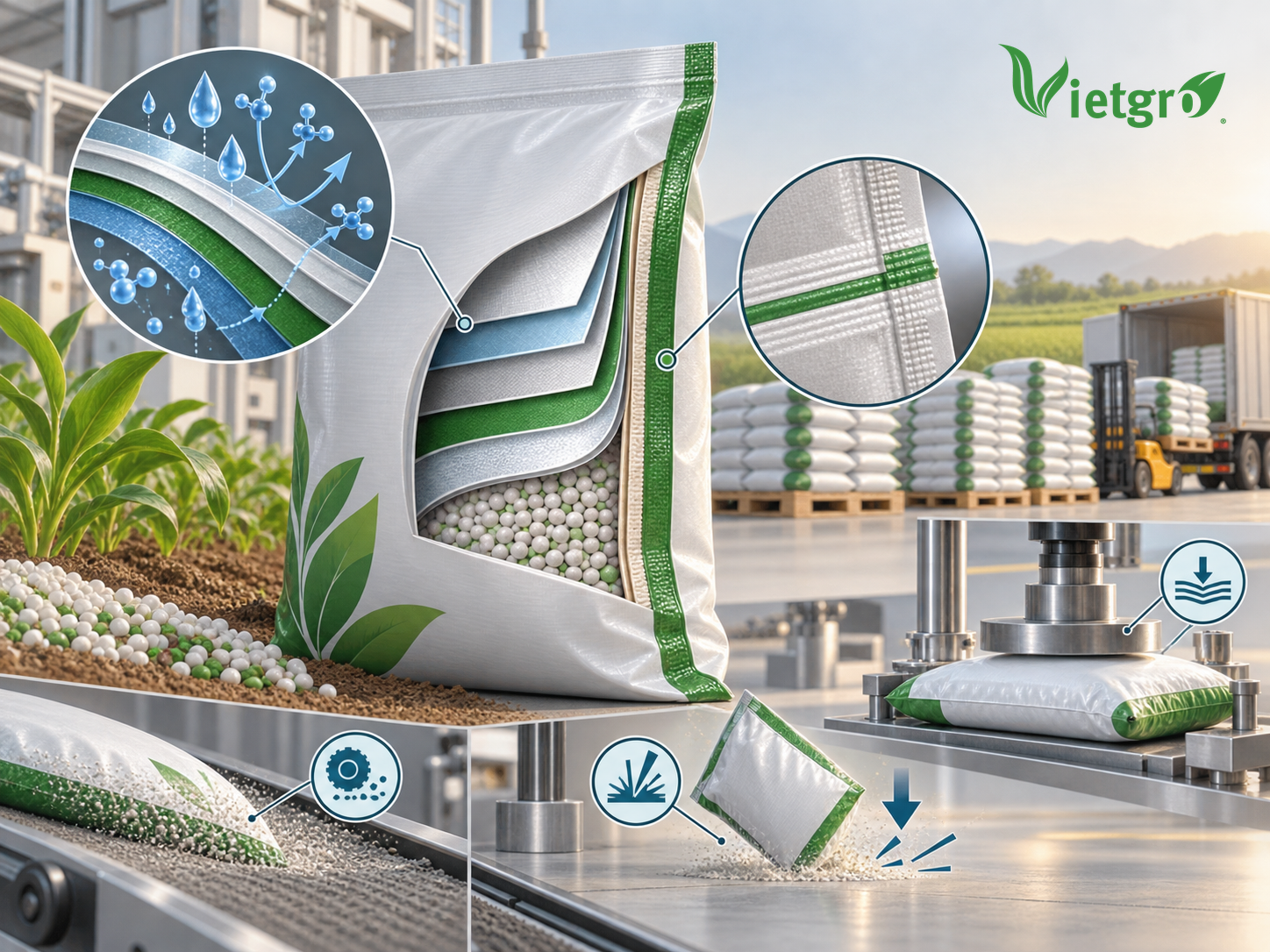
The global trade of fertilizers, soil conditioners, and specialty agricultural chemicals involves extensive logistical journeys. Bulk cargo routinely endures weeks inside steel shipping containers exposed to extreme diurnal temperature shifts, high relative humidity, and aggressive handling across multimodal transfer points.
Under these conditions, standard single-substrate packaging is inadequate. Preventing product degradation requires an engineered packaging system formulated around permeation physics, tensile mechanics, and hermetic sealing.
- Moisture Vapor Transmission Rate (MVTR) and Gas Permeation
For hygroscopic compounds such as urea, technical ammonium nitrate, and water-soluble micro-nutrients, moisture ingress is the primary cause of product failure. Ambient moisture triggers surface dissolution of prills, creating liquid bridges that recrystallize into solid caked blocks upon cooling.
- Defining MVTR Requirements: Packaging engineers evaluate barrier efficiency via Moisture Vapor Transmission Rate (measured in grams per square meter per 24 hours). Uncoated woven polypropylene possesses an open micro-pore structure that offers zero water vapor resistance.
- Barrier Stratification: To achieve MVTR values near zero, modern packaging utilizes extrusion lamination, bonding a biaxially oriented polypropylene (BOPP) film to the base woven substrate using a molten polyethylene bonding layer. The biaxial stretching process aligns molecular polymer chains tightly, drastically restricting water vapor and oxygen permeation.
- Mechanical Tensile Dynamics and Impact Resistance
Packaging deployed for export must withstand both static compressive loads during warehouse stacking and dynamic kinetic shock during port transshipment:
- Tensile and Elongation Balance: Base woven polypropylene fabrics must be calibrated to balance high tensile breaking strength (preventing sidewall splits under stack pressure) with sufficient elongation capacity (absorbing drop impact kinetic energy without brittle rupture).
- Gusset and Bottom Sealing Integrity: The weakest failure point in heavy-duty industrial sacks is the bottom closure. Utilizing high-strength polymer thread sewing reinforced with crepe paper binding, or advanced hot-air block bottom valve sealing, prevents pinhole formation and powder leakage under continuous hydrostatic cargo pressure.
- UV Degradation and Environmental Stabilization
Containerized cargo often spends extended periods in outdoor staging yards before vessel loading or customer distribution. Polypropylene is naturally sensitive to ultraviolet solar radiation, which triggers free-radical polymer degradation, causing premature embrittlement and catastrophic tearing:
- UV Additive Masterbatches: Technical packaging must incorporate targeted levels of Hindered Amine Light Stabilizers (HALS). These chemical stabilizers neutralize free radicals created by solar photo-oxidation, preserving original tensile strength and puncture resistance across prolonged outdoor exposure.
- Tailored Packaging Engineering with Vietgro Packaging
Vietgro Packaging (VGP) designs custom packaging architectures adapted to specific cargo densities, chemical properties, and logistics corridors. From custom-micron BOPP laminated bags to heavy-duty FIBC jumbo sacks with specialized inner liners, our export packaging ensures your products reach international buyers in pristine condition.
Consult with our packaging engineers to optimize your export specifications: [email protected]